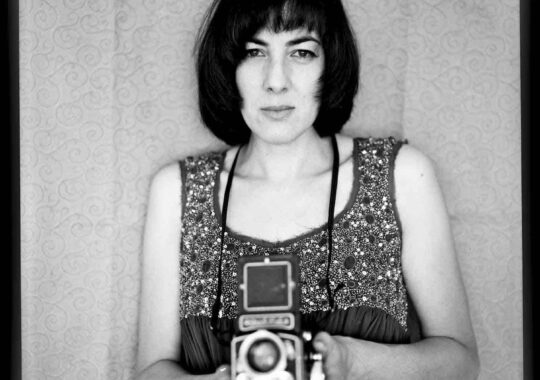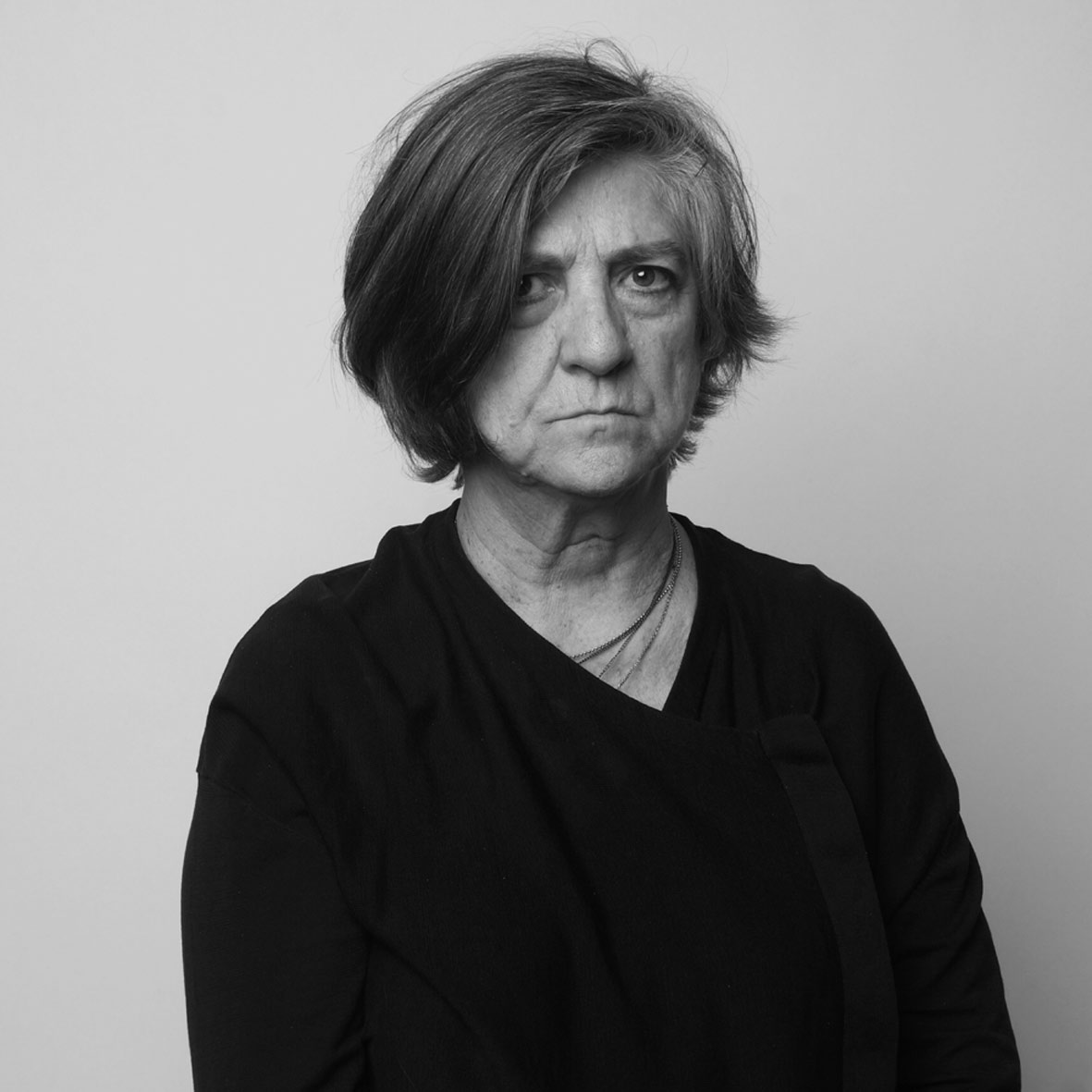
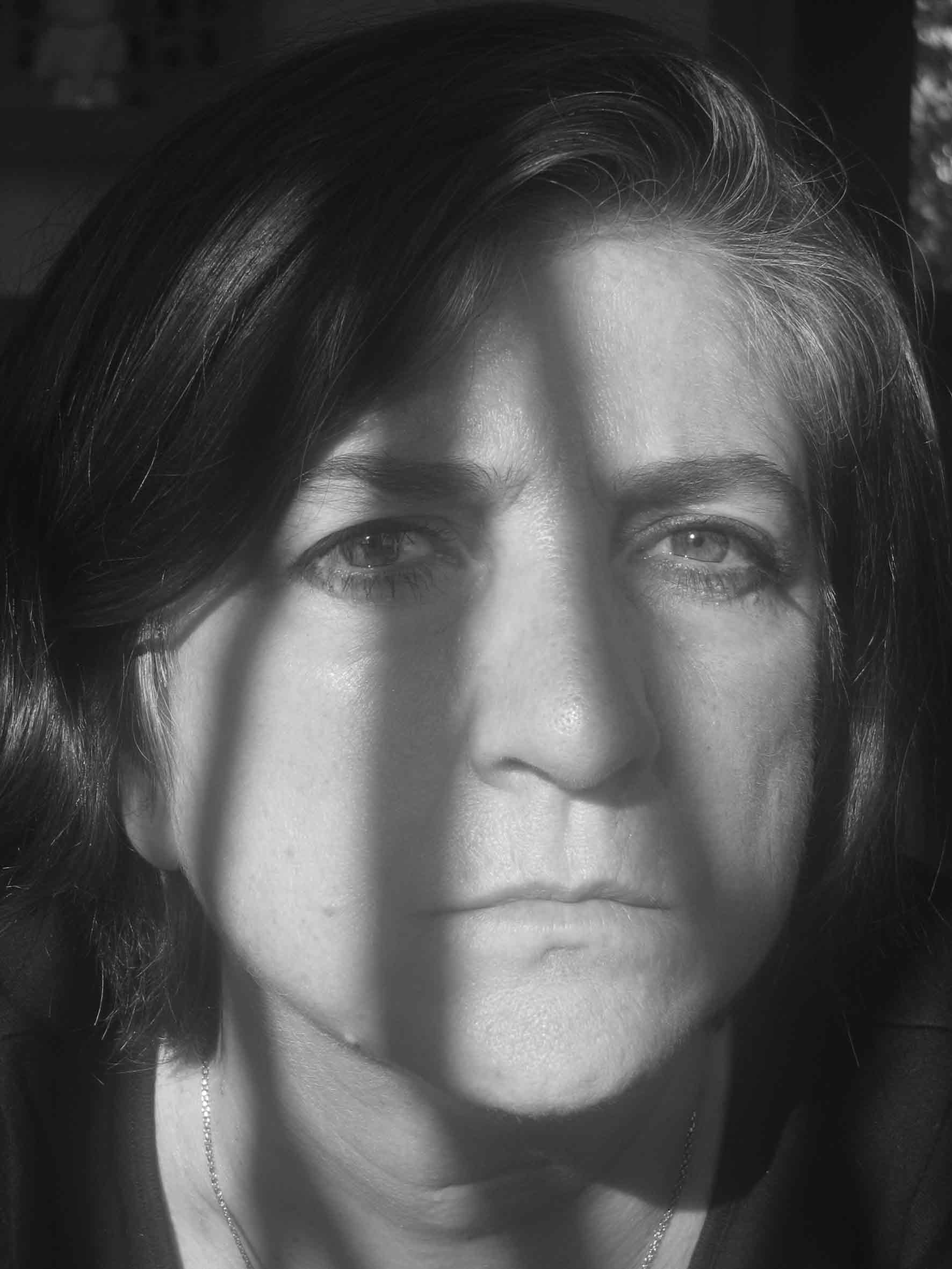
Ana da Silva. Photo By Shirley O’Loughlin
We talked with Ana da Silva, one of the founders of The Raincoats and post-punk, who after the band’s dissolution began writing songs for her solo albums, in which she has explored different musical territories. The female group’s guitarist, who continues to influence those who dare to spin her albums since her appearance, clarifies what happened when faced with the possibility of touring with Nirvana and confirms her stance in front of the Israeli occupation in Gaza, as well as other affairs during her artistic career
Read the interview in Spanish here
Translated by Abigail Medrano
-Let’s talk about your releases from the current century. Twenty years ago, you released The Lighthouse, your first record ¿the songs included in this new album are from the past or did you add new compositions?
Some of the songs on The Lighthouse had been written after The Raincoats disbanded in 1984. Some were written as I was making the album.
-In this record, there is a track featuring Stuart Moxham from Young Marble Giants. Tell us about it.
Stuart Moxham, who I knew through our connection with Rough Trade, was asked to do a song for a compilation to celebrate António Carlos Jobim’s work. As I am a Portuguese national, he thought of me to do the singing. As I like the song ‘Modinha’ very much, I decided to include it in The Lighthouse.
-Were you on tour with The Lighthouse?
I played in Portugal, Spain, Germany, and the UK.
-Then, we have Island and the single ahhh, both with Phew. ¿How did you and Phew get to match musically?
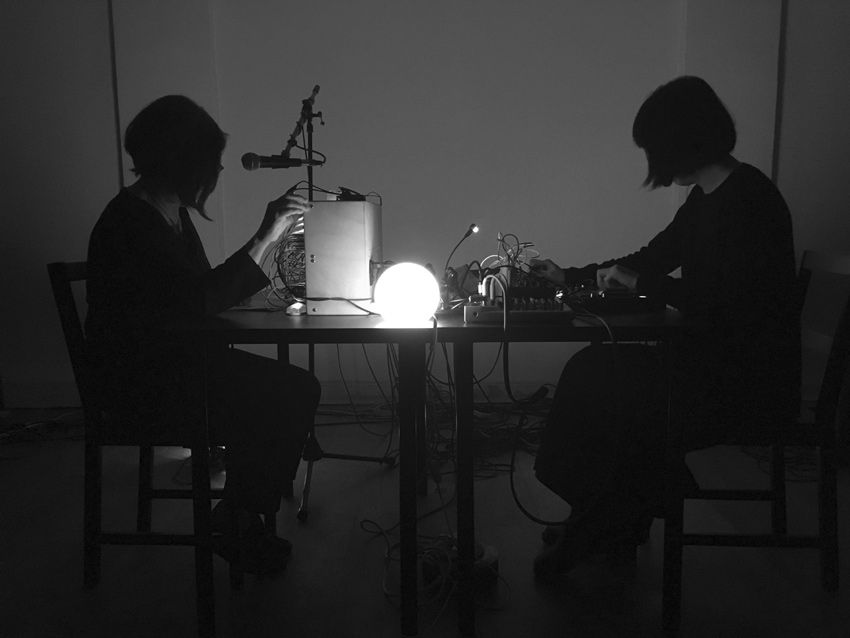
We met in Tokyo when The Raincoats played there, and she opened for us. Later, a common friend suggested we do something together. She sent me some of her music and we kept saying we must collaborate. Time went by and, meanwhile, I started buying some electronic modules for a modular synth. At a certain point, I felt I had the equipment I needed and wanted for this collaboration. I think I sent her something to which she added her response.
-The Island art seems pretty cute; it reminds us of Yves Klein. Tell us about it.
Thank you for the ‘cute’ comment! I made the painting with cobalt blue, which is a very beautiful colour. Unfortunately, it doesn’t print very faithfully. The colour looks great on a computer screen but, on paper, is more subdued. There are some colours that lose their vibrancy when printed.
Blue is the colour of the sea, so the painting is a reference to the vast sea that separates Phew and I and also our islands of Japan and the United Kingdom.
-Spoken word, experimental, industrial, ¿how was the recording process with the ex Aunt Sally?
We each started half the songs, and the other one finished them. It was quite simple. Each song was started by one of us and finished by the other, usually without it going back to the person that initiated it.
I felt very free recording and developed a close friendship with Phew. We emailed a lot about what was happening in the world, worries, ideas, feelings. We both accepted each other’s artistic input and all of this made me feel very happy.
-What other sounds did you have in mind?
The thing about synthesizers is that you can get an almost infinite amount of different sounds, so I was happy with just using the modular synth. We used our voices as well. I sang in Japanese, which I don’t speak, and she in Portuguese, which she doesn’t speak either! We sent a recording of what the words should sound like and the other person would sing. That was a lot of fun! Shima means island.
-The single In Awe Of A Painting includes Mark Beer’s version of ‘Litany’, ¿why did you choose this song as a B side?
I have Mark Beer’s single and liked it a lot, so I decided to do it. Maybe it was the sadness of it that attracted me to it… I wanted to have a song on the B side of the single that wasn’t already on the album.
-What was your experience with the girls of Chicks on Speed?
My experience with Chicks on Speed was great. We have become friends. They’re very creative, talented and good people with a lot of energy, and spark.
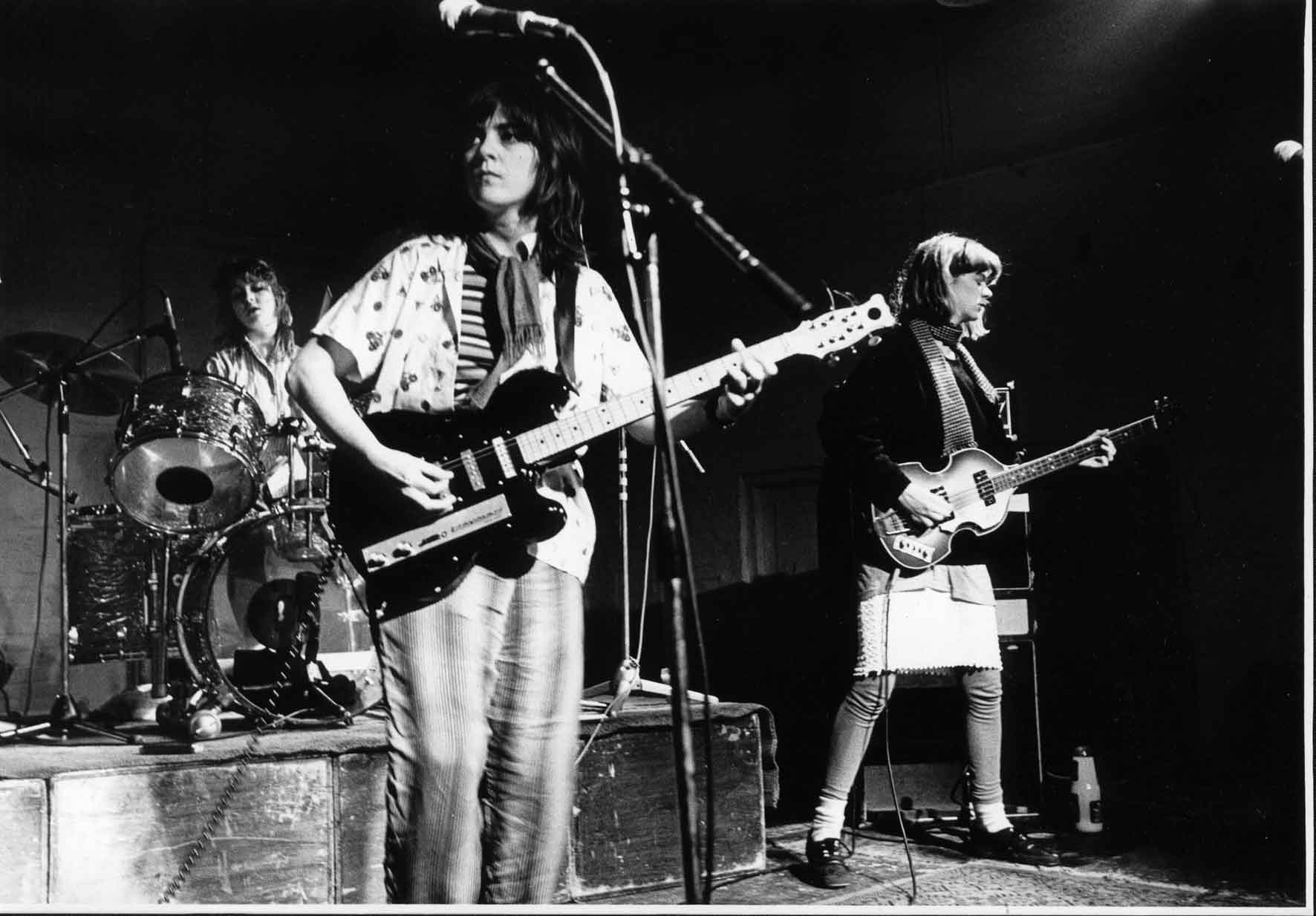
-When you first formed The Raincoats, there was a feeling like opening a path in a male territory. ¿Do you recall what outraged you the most, or what you wanted to change? Today, ¿what are your wishes and concerns as an artist and as a woman?
There were only very few women playing music in the late 70s, but those few were so inspiring! It made you believe that being a woman and playing music was possible.
The thought of playing electric guitar, for instance, never occurred to me as a possibility until punk. The mood at the time of punk was very much «if you want to do or say something, just do it. You don’t need a lot of expertise, just courage, and energy». In my view the pursuit of perfection can be a hinderance.
-¿Why did Kurt Cobain convince The Raincoats to get back?
This is one of those myths that get perpetuated by the internet. He didn’t convince us to get back.
Our records weren’t available in the early 90’s and people were more interested in CDs, so Shirley O’Loughlin, who is our manager/collaborator, went to talk to Geoff Travis and they both decided to re-release our 3 albums, The Raincoats, Odyshape and Moving on Rough Trade Records on CD. To commemorate this, we decided to do a gig in London. When Kurt heard about this, he said «if they’re plying one gig, they can play more» and so invited us to tour with Nirvana in the UK.
-Tell us about those shows on the tour with Nirvana.
Very unfortunately, they didn’t happen. First, the tour got postponed, because Kurt wasn’t well and then he died, so, obviously the tour got cancelled. We were in New York doing a few shows when we found out. It was incredibly sad. There was so much more still to come out of his creative mind.
-The Raincoats sound has broken many conventional rules in music. ¿How did its experimental focus emerge?
In a way, it was all experimental, because our knowledge was quite limited. So, we just tried things without «studying» how songs were constructed. We had heard a lot of music, although that experience was more from a fan point of view. We didn’t really follow rules. We just played whatever we wanted, and, if we liked it, we kept it. We felt very open to try ideas even if they felt strange.
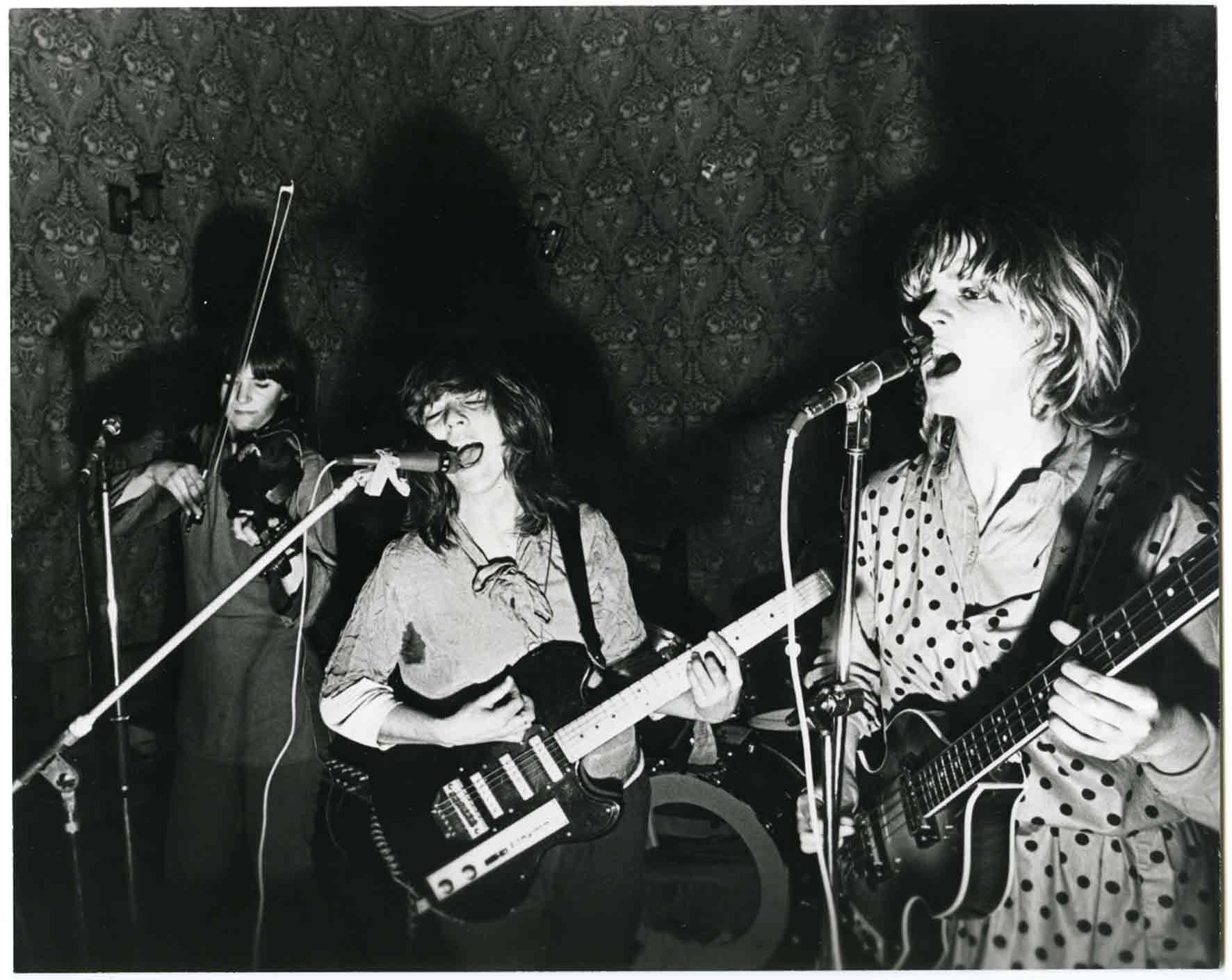
-At that time, were you thinking of playing feminist music, or did you get to that understanding with the time?
We didn’t decide ever to make feminist music. We just wrote what we felt was important at the time of writing and, in a few songs, we expressed specific feminist points of view. That came naturally.
-Were you aware that you’re promoting a new role to women in music?
Not really. We just expressed our worries, feelings and opinions and, if those were inspiring in some way to other women, that would be a great bonus.
-Tell us about how it was to navigate a male-dominated music scene with such a disruptive proposal.
Many men don’t like it when a woman does something that is as good or better than what they do. They also don’t like it if women are disrupting or challenging the status quo. We lived and live in that world, but I feel that the only way to go forward, is by having people challenging and fighting against that status quo.
I tend to look at things in a positive way. Our fans, women and men were generally striving for a positive change. Our fans, women and men were generally striving for s positive change.

-How did you live The Raincoats «rediscovery» by the new generations?
It makes me so happy to know that people take something from our music and creative expression. When we play, the audience includes all generations, and most are quite young.
In October 2017 Jenn Pelly wrote a 331/3 book about our first album The Raincoats, and in July 2025 a biography of the band Shouting out loud: lives of The Raincoats written by Audrey Golden.
-Since you are a visual artist and a writer as well, how do you think your music relates with these other creative languages?
They are different practices but, if a person is honest about it, these different forms of art are the expression of the same person. I think that a lot of what I express through music comes out in a similar way in my painting.
-What is your inspiration beyond music?
Anything can be an inspiration. If it’s positive I embrace it, if negative I react against it and make a positive. To wrap up, just a couple thoughts.
-The Raincoats music has been placed historically in many ways as a resistance tool. ¿What do you think about the current world’s social-political scenario, specifically in the Middle East?
I find the state of the world very depressing. There are always a lot of unfair situations in many countries, and justice is never guaranteed in many of them. «Money IS what makes the world go around», sadly. It’s a disgrace what some humans do to other humans for money and power. The greed is like a disease – more money for the ones that don’t need it and less to the ones that can’t even have heath care. What are we made of?
-And last, we would like to know your opinion about the actions taken by the music industry, film and arts regarding the genocide committed against Palestinian people by the israeli zionism?
A lot of creative people are against what’s happening in Gaza, but the power of money keeps the attack going, and the efforts made by the creatives against it, don’t go very far. But it’s always worth expressing discontent for a situation like this. We have to believe that it’ll have some positive influence.
-Free Palestine?
A genocide is a genocide. You can’t interpret it in any other way. Stealing is stealing. Torturing is torturing. Killing is killing.
FREE FREE PALESTINE
Thank you so much, Ana.
Gracias!